Classic Swedish Fika Bakes: What to Learn First
- Which traditional Swedish fika bake should you learn first?
- What counts as a fika bake?
- Chokladbollar: the easiest no-bake starting point
- Kladdkaka: the best first oven bake
- Kanelbullar: the first yeast bake to learn
- Kardemummabullar: for spice and shaping practice
- Småkakor and the seven-cookies tradition
- Lussekatter: a Lucia-season saffron bun
- Semlor: seasonal buns assembled close to serving
- Prinsesstårta: a project for an occasion
- A sensible order for learning the repertoire
- How to plan one baking session for several fika breaks
Which traditional Swedish fika bake should you learn first?
Start with kladdkaka if you want one dependable oven bake: it uses a simple batter, asks you to judge a deliberately soft centre, and portions easily for several coffee breaks. Start with chokladbollar if you do not want to turn on the oven. Choose kanelbullar when you are ready to learn a yeasted dough. Save semlor and prinsesstårta for days when you can assemble and serve cream-filled bakes promptly.
There is no single required fika pastry. Fika is the pause and company as much as the food. Sweden’s official tourism site describes it as a social coffee break that often includes something sweet, with the cinnamon bun as a familiar choice, not an entry requirement. Our simple guide to hosting fika keeps the same principle: choose one thing you can make without spending the entire pause in the kitchen.
| Bake | Swedish name | Best first lesson | Effort | Season |
|---|---|---|---|---|
| Chocolate oat balls | Chokladbollar | Mixing to a rollable texture | Low; no oven | Year-round |
| Sticky chocolate cake | Kladdkaka | Reading a soft-centre doneness cue | Low | Year-round |
| Cinnamon buns | Kanelbullar | Yeast dough, proofing, and shaping | Medium | Year-round; especially visible on 4 October |
| Cardamom buns | Kardemummabullar | Spice handling and knot shaping | Medium to high | Year-round |
| Small cookies | Småkakor | Consistent portioning and batch baking | Low to medium | Year-round |
| Saffron buns | Lussekatter | Enriched dough and S-shaping | Medium | Lucia and the Christmas season |
| Cream-and-almond buns | Semlor | Component timing and fresh assembly | High | Shrove Tuesday season |
| Princess cake | Prinsesstårta | Layering, cream, custard, and marzipan | High | Celebrations and special fika |
What counts as a fika bake?
The useful category is broader than pastry. Swedish fika tables include yeast buns, cakes, cookies, and no-bake sweets. Visit Sweden’s current introduction to fika names kanelbullar, prinsesstårta, chokladbollar, kladdkaka, and the seven-cookies tradition among classic examples. Open-faced sandwiches can appear too. The table changes with the household, workplace, season, and amount of time available.
“Fikabröd” is a useful umbrella term for the sweet bread, bun, cake, or biscuit served with the break. It does not mean that every host must produce a formal spread. One well-made cake and coffee is a complete fika. A bought biscuit and tea can be one too.
For a home baker, group the repertoire by technique:
- Mix and chill: chokladbollar.
- Mix and bake: kladdkaka and small cookies.
- Mix, knead, proof, shape, and bake: kanelbullar, kardemummabullar, and lussekatter.
- Bake components, cool, fill, and assemble: semlor and prinsesstårta.
That order is also a sensible learning path. It adds one source of uncertainty at a time.
Chokladbollar: the easiest no-bake starting point
Chokladbollar are small chocolate-oat balls commonly made with oats, butter, cocoa, sugar, and coffee, then rolled in coconut or pearl sugar. They teach texture rather than oven timing. The mixture must be soft enough to roll without cracking but firm enough to hold its shape after chilling.
Choose them when you have little time, a small kitchen, or a beginner who wants a job at the table. Measure before adjusting. If the mixture is crumbly, a small amount of the recipe’s liquid is more controlled than adding an unmeasured splash. If it is sticky, chilling it first is usually a better first move than burying the flavour under extra dry ingredients.
This is no-bake, not no-care. Coffee adds caffeine. Butter brings milk unless a verified dairy-free alternative is used. Oats can present gluten cross-contact concerns unless the package and local standards meet the eater’s needs. Check every cocoa, coating, and substitute label for the allergies at your table.
Traditional chokladbollar do not need raw flour. Do not improvise by adding untreated flour to make the mixture firmer. The US Food and Drug Administration explains that flour is a raw food and advises against eating raw dough or batter because cooking is the control step for bacteria that may be present.
Kladdkaka: the best first oven bake
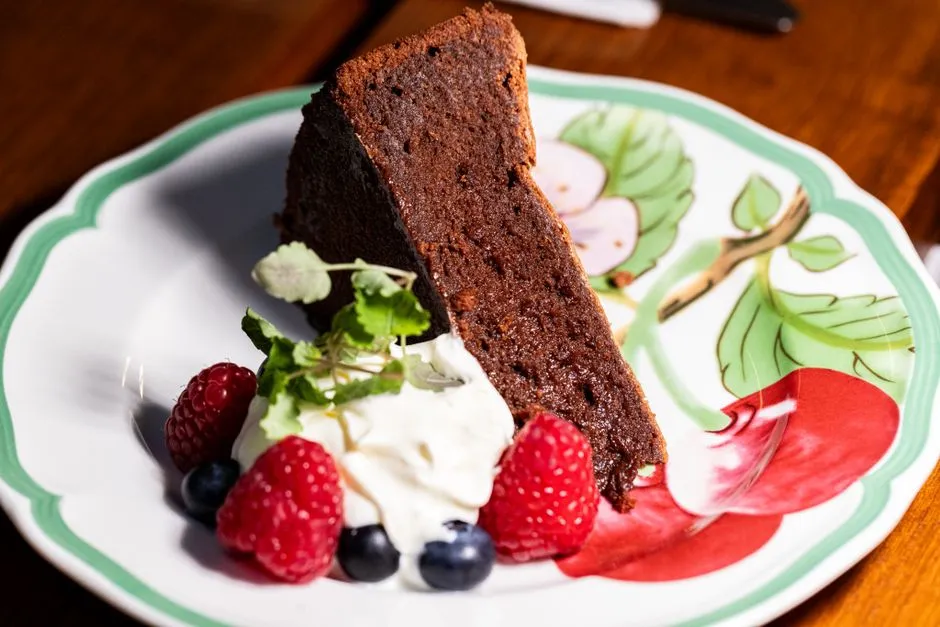
Kladdkaka means sticky cake, and the centre is supposed to remain dense and soft rather than bake into an airy sponge. That makes it a useful first lesson in reading a recipe’s intended texture. A dry skewer is the wrong target if the tested recipe calls for a fudgy centre.
The method is compact: prepare the tin, mix a batter without trying to aerate it like sponge cake, bake to the recipe’s edge-and-centre cues, then cool before cutting. The hard part is stopping at the intended point. Oven temperature, tin material, tin dimensions, and batter depth all affect timing, so do not move a time from one recipe into another with a different pan.
Our kladdkaka recipe gives weights, a defined tin, and food-safety cues for a soft but properly baked centre. Learn that once and you have a cake that can be cut into modest pieces for several pauses. Portion before freezing if you want to take out one piece rather than thaw the entire cake.
Kladdkaka commonly contains wheat, egg, and dairy. Serving it with whipped cream or ice cream adds another perishable component. Keep those toppings refrigerated and bring out only what will be served.
Kanelbullar: the first yeast bake to learn
Kanelbullar are Swedish cinnamon buns: wheat dough scented with cardamom, filled with butter, sugar, and cinnamon, and often finished with pearl sugar. Visit Sweden calls the cinnamon bun a fika staple and records Cinnamon Bun Day on 4 October. The bun is available year-round; the date is a celebration, not its only season.
Choose kanelbullar when you want to learn three linked skills:
- Develop an enriched yeast dough that is elastic without being packed with extra flour.
- Judge proofing from volume and feel as well as the clock.
- Shape and seal the filled dough so the layers stay distinct.
Our Swedish cinnamon bun recipe supplies exact weights, shaping, proofing cues, and a bake-and-freeze route. Make that version before moving to elaborate knots. The familiar spiral or twist gives you room to understand the dough first.
Buns are the practical answer to a week of small coffee breaks because they freeze as individual portions. Cool them fully, freeze them as the recipe directs, and take out only the number needed. That protects quality better than leaving an entire batch exposed on the counter for days.
Kardemummabullar: for spice and shaping practice
Kardemummabullar shift the emphasis from cinnamon filling to cardamom. They often use folded strips and knots that expose alternating layers of dough and filling. The learning challenge is not simply “more cardamom.” It is getting clear spice flavour while keeping the dough workable and the filling inside the shape.
Freshly crushing cardamom seeds can produce a different texture and aroma from using a long-open jar of fine powder, but follow the quantities in a tested recipe rather than translating one form by eye. Cardamom can appear in the dough, filling, or both. Those are recipe choices, not authenticity tests.
Learn these after a straightforward cinnamon bun if shaping makes you nervous. If knots unravel, diagnose the strip length, filling leakage, and final tuck separately. Changing dough hydration, flour, proof time, and shaping all at once makes the next batch impossible to read.
This guide does not link to a cardamom-bun recipe because that article is not published yet. The cinnamon-bun method is the available foundation.
Småkakor and the seven-cookies tradition
Småkakor are small cookies, and their great practical advantage is keeping the serving small while offering variety. The historic kafferep tradition is associated with “sju sorters kakor,” seven kinds of cookies. That does not mean an ordinary fika now requires seven homemade batches.
Visit Sweden’s history of seven kinds of cookies traces the late-19th-century kafferep and names drömmar, chokladsnittar, nötkakor, hallongrottor, havrekakor, brysselkakor, and schackrutor among the repertoire. These are not one master dough with seven decorations; ingredients and techniques differ.
For a small kitchen, learn one cookie before building an assortment. Hallongrottor teach portioning and a jam indentation. Chokladsnittar are baked in logs and sliced. Schackrutor add careful assembly. Nötkakor require a tree-nut warning. Drömmar may use ammonium carbonate, which should be measured and used only as the recipe directs.
Dry, unfilled cookies are often easier to store than cream-filled bakes, but storage still follows the actual recipe. Cool them completely before closing a container, separate crisp and soft styles, and freeze excess rather than assuming every cookie remains at its best for a full week at room temperature.
Lussekatter: a Lucia-season saffron bun
Lussekatter are saffron-coloured yeast buns commonly shaped like an S and finished with raisins. They belong most clearly to the weeks around Lucia and Christmas. Visit Sweden’s Lucia guide identifies the S-shaped saffron bun with Lucia celebrations, while its Christmas guide places lussekatter on fika tables in the weeks leading up to Christmas. Lucia Day is 13 December.
The technical step is distributing a small amount of saffron through enriched dough without drying the bun through overbaking. Use the saffron quantity and preparation method from one tested recipe. Different recipes grind, steep, or mix it differently; combining half of two methods is not more traditional or more reliable.
Choose lussekatter after you can read a basic bun dough. The S-shape itself is approachable, but saffron is expensive enough that the batch is a poor place to improvise proofing or bake time. Like cinnamon buns, unfilled lussekatter can be cooled and frozen individually for later fika.
Semlor: seasonal buns assembled close to serving
A semla is a wheat bun, commonly cardamom-scented, filled with almond paste and whipped cream, then capped with its cut lid. The plural is semlor. Visit Sweden’s semla history ties it to Shrove Tuesday, called Fettisdagen in Sweden, while noting that the modern sales season stretches beyond that single day.
Semlor are not the best first yeast bake because three jobs must go right: the bun, the almond filling, and the whipped-cream assembly. Make the unfilled buns ahead if the recipe allows, but assemble near serving. A filled semla is perishable.
Keep cream and assembled buns refrigerated. The federal FoodSafety.gov perishable-food chart directs people to discard cream-filled pastries held above 40°F (4°C) for more than 2 hours. That is a safety ceiling, not a serving target. Keep the tray cold and return unused filled buns to refrigeration promptly.
Almond is a tree-nut allergen. Do not present a different filling as nut-free until every ingredient and cross-contact statement has been checked.
Prinsesstårta: a project for an occasion
Prinsesstårta, or princess cake, layers sponge, vanilla cream or custard, jam, and whipped cream beneath marzipan, traditionally green and often topped with a pink rose. It belongs in the fika repertoire, but it is an assembly project rather than a casual first bake.
Choose it when the point is the cake itself: a birthday, celebration, or planned afternoon with refrigerator space. The sponge must cool, the filling must be cold and stable, and the dome needs a crumb-free surface before the marzipan goes on. A warm sponge and soft cream cannot be rescued by prettier marzipan.
Because recipes vary in egg treatment, custard method, and storage, use one tested formula from start to finish. Keep the finished cake refrigerated and manage the same time-out-of-refrigeration limit as other cream-filled pastries.
A sensible order for learning the repertoire
Use this sequence if you want skills to build rather than collide:
- Chokladbollar: learn measured texture without oven variables.
- Kladdkaka: learn batter consistency and a specific soft-centre cue.
- One small cookie: learn even portioning and batch timing.
- Kanelbullar: learn enriched yeast dough, proofing, filling, and a simple shape.
- Kardemummabullar: keep the dough skill and add more demanding knots.
- Lussekatter: apply yeast skills to saffron and a seasonal shape.
- Semlor: add filling and cold assembly to a bun you already understand.
- Prinsesstårta: combine sponge, custard, cream, jam, and marzipan when each component is familiar.
You do not need to finish the list. A reliable kladdkaka and a tray of kanelbullar cover a great many tables.
How to plan one baking session for several fika breaks
Pick one fresh item and one freezer item. For example, serve kladdkaka on baking day and freeze cooled cinnamon buns individually. Later in the week, thaw only the buns you need and brew a measured 500-gram pour-over. Do not build a seven-day plan around assembled semlor or princess cake; cream-filled bakes need refrigeration and are better matched to a specific serving time.
Before baking, make an allergen card for wheat or gluten, milk, egg, almond or other tree nuts, oats, and any substitute product. Add caffeine where coffee appears in the bake. Use pasteurised dairy where advised, keep raw flour and batter away from ready-to-eat food, wash hands and work surfaces after handling flour or egg, and follow the chosen recipe’s temperature and storage directions.
The right first fika bake is the one that teaches one new skill and still leaves time to sit down. Start small, record what happened, and make the second batch better rather than making the first table bigger.