Swedish Cardamom Buns Recipe: Shape, Proof, Bake
- Keep the dough, filling and shape together
- What are the ingredients and method?
- Which part of cardamom are you measuring?
- How can you organise the filled dough without losing track?
- What should you watch during the rises?
- What if the finished buns differ from one another?
- How do you plan the next coffee break?
- Frequently asked questions
- Sources
Keep the dough, filling and shape together
Swedish cardamom buns combine spiced yeast dough with a cardamom filling. Use one complete recipe, weigh ingredients, judge rises by the stated volume cue, and bake thoroughly before cooling. Never taste raw dough. Check wheat, milk and other allergens, prevent cross-contact, and follow appliance instructions around mixers, blades, ovens and hot syrup. Freeze cooled extras promptly; obtain qualified advice for individual dietary needs.
This is a source-led home-baking guide, not a recipe we have tested. It gives a complete published formula followed by practical checks for preparing the spice, keeping ingredients organised, and reviewing the shape. For the broader repertoire, see the classic Swedish fika bakes guide.
What are the ingredients and method?
John Duxbury's published recipe, condensed:
Dough: 425g bread flour, plus extra as needed; 75g caster sugar; 7g fast-action dried yeast; 3g salt; 5g freshly ground cardamom; 125g whole milk; 125g water; 75g softened cubed butter.
Filling/topping: 10g freshly ground cardamom, 100g granulated sugar, 100g softened butter.
Glaze: 50g water, 45g caster sugar; optional ¼ tsp vanilla paste.
- Using a stand-mixer dough hook, combine flour, sugar, yeast and cardamom; stir in salt. Gradually add milk/water warmed to 35–40°C.
- Knead in butter gradually. Add flour sparingly if too sticky; knead another 3 minutes. Cover in a lightly oiled bowl; rise until doubled.
- Mix filling sugar/cardamom. Reserve 25g; combine remaining 85g with butter.
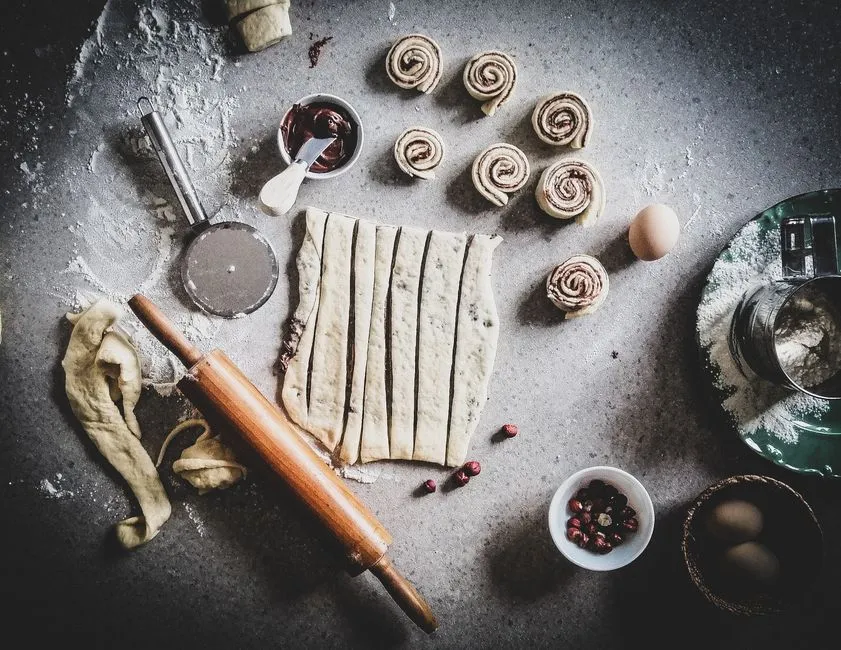
- Roll dough 50×40cm; spread filling. Fold to 50×20cm; roll to 50×30cm. Cut 12–16 strips. Twist, coil, tuck ends underneath; place on prepared trays.
- Sprinkle reserved mixture. Cover; proof about 60 minutes, until doubled.
- Preheat to 220°C conventional/200°C fan. Heat glaze ingredients, stirring to dissolve sugar; boil.
- Bake 10–12 minutes until golden. Brush with glaze; cover with a cloth.
Prepare trays with suitable baking parchment. Use pasteurised milk. Follow your mixer's dough-hook speed, capacity and running-time limits: recipe speed numbers do not transfer reliably between machines. Stop and isolate equipment as its manual directs before scraping, clearing, or adjusting attachments. If recipe operation conflicts with the manual, do not proceed with that machine.
Keep fingers clear of the cutter and use a stable work surface. Handle oven trays with dry oven gloves. Hot syrup can burn; use suitable cookware and a pastry brush without touching the syrup or hot buns. Keep the covering cloth away from burners and oven elements.
Which part of cardamom are you measuring?
Kristi at True North Kitchen explains that decorticated cardamom seeds have been removed from their pods and can then be ground. That distinction matters when buying the spice: “whole cardamom” can mean a package of pods, whereas loose seeds have already had the husks removed.
Read the product description before weighing. Write the form beside the amount in your preparation notes, rather than recording only “cardamom.” Use a mortar and pestle or a suitable grinder according to its instructions. Do not improvise blade access or reach into a running appliance.
Freshly prepared spice and a long-open jar are not an exact like-for-like sensory comparison. This guide makes no tested flavour ranking and supplies no invented pod-count conversion. Keep the recipe's measured form consistent.
How can you organise the filled dough without losing track?
Set out separate labelled containers for dough ingredients, filling, reserved topping and glaze. An ingredient listed once can be used at several stages. Transfer its reserved portion before mixing the remainder into something else.
Do not add the topping quantity a second time to the shopping total. Likewise, distinguish water weighed in grams from water measured by a jug; follow the specified unit rather than silently rewriting the formula.
For shaping practice, use an unfilled strip of paper to rehearse the direction of a twist and coil before handling food. This is only an original visual rehearsal, not a model of dough elasticity or proofing. It cannot tell you how tightly dough should be wound or whether a bun will hold during baking.
Then work from the recipe's actual dough dimensions. If one end remains visible rather than secured, note that difference before making another shape. Keep cutting tools out of the practice area when they are not needed.
What should you watch during the rises?
Record the starting dough level and check the specified volume change. A timer tells you when to look; it does not measure expansion. Keep the recipe open so you do not confuse the first rise with the shaped-bun proof.
Make a short record of three observations: the starting appearance, the appearance at the first check, and the appearance when you proceed. Note room conditions without inventing an ideal room temperature that the source does not give.
If progress differs substantially from the stated method, check the yeast type, package instructions and measured ingredients. Do not compensate with uncontrolled heat, extra yeast tipped into finished dough, or indefinite warm holding. Those actions are not part of this recipe.
What if the finished buns differ from one another?
Inspect safely cooled, fully baked buns. Record which pieces were shaped first and their positions on the tray. Separate observations from conclusions:
| Observation | Useful record |
|---|---|
| One piece opened before baking | Photograph or sketch its end position |
| Pieces varied visibly in size | Record how the strips were divided |
| One side coloured differently | Note tray position and oven mode |
| Filling escaped from particular pieces | Note their shape before the bake |
This record does not prove a single cause. It helps identify the question to take back to the recipe author. Avoid changing flour, yeast, filling and oven setting simultaneously on the basis of one appearance.
Thorough baking remains necessary. The Food Standards Agency advises against eating raw flour or dough unless labelled ready to eat. Do not taste dough to diagnose it. Keep flour separate from ready-to-eat food and wash hands, utensils and surfaces after handling it.
How do you plan the next coffee break?
Freeze the cooled extras in portions rather than assigning an unsupported room-temperature shelf life. FSA freezing guidance recommends freezing homemade goods as soon as possible, suitable airtight packaging, and a freezer around −18°C. Defrost in the fridge and use within 24 hours once fully defrosted. Freezing does not kill all bacteria.
Added cream, custard or another perishable accompaniment needs its own storage controls; it does not inherit the bun's handling instructions. Check every package and the allergen information relevant to the guest.
Choose drinks from the coffee-brewing collection and plan the gathering through the fika table. The baking and the hosting can be separate tasks.
Frequently asked questions
Can I use cardamom pods instead of ground cardamom?
Prepare the spice in the form the chosen recipe specifies before measuring it. Pods, loose seeds and finely ground powder are not interchangeable spoonfuls. The outer husk is not the same ingredient as the seeds inside. If the package or recipe leaves the required form unclear, resolve that before mixing the dough.
Why did my cardamom knots come undone?
Compare the unbaked shapes with your notes or photograph: where was the end positioned, and did the pieces already differ before proofing? An exposed end is an observable shaping difference, not proof of a yeast problem. Practise the motion separately before changing the entire dough formula or adding unmeasured flour.
Can I change the yeast or make an overnight version?
Do not assume another yeast type or an overnight schedule is equivalent. Use the recipe's stated yeast and timetable, or find a complete version written for the method you need. Ingredient labels and the manufacturer's instructions still apply. Do not hold dairy ingredients or mixed dough in uncontrolled warmth to fit a convenient schedule.
How should I freeze buns for later fika?
Cool baked buns before packing in labelled freezer-safe portions. Follow package instructions and freeze homemade goods as soon as possible; freezing does not make badly handled food safe. Use a freezer around −18°C. Defrost portions in the fridge and use within 24 hours once fully defrosted, following any stricter ingredient guidance.
Are these suitable for someone with a food allergy?
Do not infer suitability from the recipe's name. Check every ingredient and precautionary label, including flour, dairy, spices and flavouring, and assess preparation cross-contact for the person eating. A recipe with no intentionally added egg is not an egg-free guarantee. Where needs are uncertain, obtain appropriate professional advice rather than improvising an exclusion.